

How noisy are home ice makers?
When it comes to enhancing the convenience of daily life, home ice makers have become an increasingly popular addition to many households. As a supplier of a wide range of home ice makers, including the home ice block maker, home portable ice maker machine for countertop, and compact portable ice maker, I often get asked about one crucial aspect: how noisy are these appliances?
Understanding the Noise Sources in Home Ice Makers
To comprehend the noise levels of home ice makers, we first need to understand where the noise comes from. There are several key components in an ice maker that can generate sound during operation.
Compressor Noise
Most home ice makers, especially those with a traditional refrigeration system, are equipped with a compressor. The compressor is responsible for compressing the refrigerant gas, which is a vital step in the ice - making process. When the compressor starts up and runs, it can produce a humming or buzzing sound. The intensity of this noise depends on the quality and design of the compressor. High - end compressors are often engineered to operate more quietly, while lower - quality ones may be noisier.
Fan Noise
In addition to the compressor, many ice makers have a fan. The fan helps to circulate air within the unit, which is essential for proper heat dissipation. As the fan blades spin, they create a whirring sound. Similar to the compressor, the size, speed, and quality of the fan can influence the noise level. A larger fan running at a high speed is likely to be louder than a smaller, more efficient one.

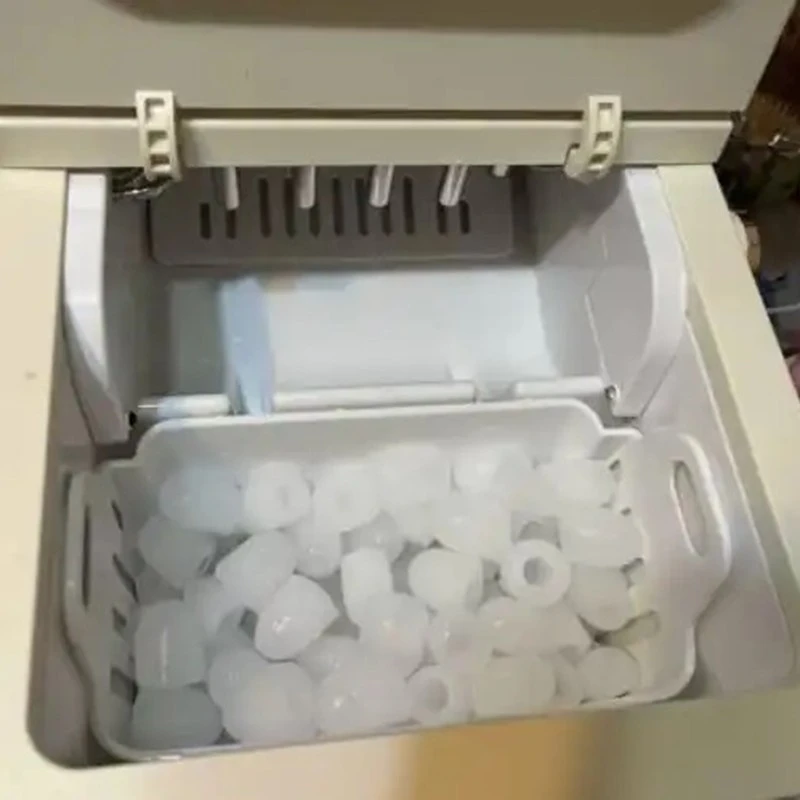
Water Pump Noise
The water pump in an ice maker is responsible for drawing water from the reservoir and delivering it to the ice - making tray. When the pump is in operation, it can produce a gurgling or pumping sound. The noise from the water pump is usually less prominent than that of the compressor or the fan, but it can still contribute to the overall noise level of the ice maker.
Measuring the Noise Levels of Home Ice Makers
Noise is typically measured in decibels (dB). A whisper is about 30 dB, normal conversation is around 60 dB, and a vacuum cleaner can produce noise levels of up to 70 - 80 dB. Most home ice makers have noise levels ranging from 40 to 60 dB.
Quiet Ice Makers
Some high - end home ice makers are designed to operate as quietly as possible. These models often use advanced insulation materials to reduce the transmission of noise from the compressor and other components. They may also feature low - noise fans and pumps. Quiet ice makers typically have noise levels in the range of 40 - 45 dB. At this level, the noise is barely noticeable in a normal home environment and is unlikely to cause any significant disturbance.
Average Noise Level Ice Makers
The majority of mid - range home ice makers have noise levels between 45 and 55 dB. This level of noise is similar to the sound of a refrigerator running. While it may be noticeable in a quiet room, it is generally not overly disruptive. These ice makers are a good balance between cost and noise performance.
Noisier Ice Makers
Lower - cost ice makers, or those with less advanced technology, may have noise levels above 55 dB. At this level, the noise can be more intrusive, especially in a quiet living space. For example, if you place a noisy ice maker in a bedroom or a study, it could potentially interfere with sleep or concentration.
Factors Affecting the Perceived Noise of Home Ice Makers
It's important to note that the perceived noise of an ice maker can be influenced by several factors, not just the actual decibel level.
Placement
The location where you place the ice maker can have a significant impact on how noisy it seems. If the ice maker is placed on a hard, resonant surface, such as a tile floor or a wooden countertop, the noise can be amplified. Placing the ice maker on a soft, cushioned surface, like a rubber mat, can help to absorb some of the vibrations and reduce the perceived noise.
In addition, the proximity of the ice maker to living areas matters. Placing it in a corner of the kitchen or in a utility room away from the main living spaces can make the noise less noticeable.
Ambient Noise
The ambient noise level in your home also affects how you perceive the noise of the ice maker. In a noisy kitchen with a running dishwasher, a radio, or other appliances, the noise from the ice maker may blend in and be less noticeable. However, in a quiet room, the same ice maker may seem much louder.
Comparing Different Types of Home Ice Makers in Terms of Noise
Home Ice Block Makers
Home ice block makers often have larger compressors and water pumps compared to other types of ice makers because they are designed to produce larger ice blocks. This can result in relatively higher noise levels. However, many modern home ice block makers are equipped with advanced noise - reduction technologies to minimize the impact.
Home Portable Ice Maker Machine for Countertop
Home portable ice maker machine for countertop are generally more compact and designed for use on countertops. They usually have smaller compressors and fans, which means they tend to be quieter than larger ice block makers. Their noise levels are often in the lower end of the normal range, making them a good choice for small kitchens or areas where noise may be a concern.
Compact Portable Ice Makers
Compact portable ice makers are even more lightweight and portable. Due to their smaller size, they typically have less powerful components, resulting in lower noise levels. These ice makers are ideal for use in RVs, small apartments, or as a supplementary ice - making device in a camper.
Tips for Reducing the Noise of Home Ice Makers
If you already have a noisy ice maker or want to ensure that your new one operates as quietly as possible, here are some tips:
Choose a High - Quality Ice Maker
Investing in a high - quality ice maker from a reputable brand can significantly reduce noise. These ice makers often use better - designed compressors, fans, and pumps, which are engineered to operate more quietly.
Proper Placement
As mentioned earlier, placing the ice maker on a soft surface and in a less - used area of the home can help to reduce the perceived noise. You can also consider using sound - absorbing materials around the ice maker, such as acoustic panels or blankets.
Regular Maintenance
Regular maintenance of the ice maker is crucial for quiet operation. Cleaning the unit, checking the water filter, and ensuring that all components are in good working condition can prevent excessive noise. For example, a clogged water filter can cause the water pump to work harder, which may increase the noise level.
Conclusion
In conclusion, the noise levels of home ice makers can vary widely depending on the type, quality, and design of the unit. While some ice makers can be relatively quiet, others may produce a noticeable amount of noise. As a supplier of a diverse range of home ice makers, including home ice block maker, home portable ice maker machine for countertop, and compact portable ice maker, we understand the importance of providing quiet and efficient ice - making solutions.
If you are in the market for a home ice maker and noise is a concern, we can help you select the right model that meets your needs. Our team of experts is ready to assist you in choosing the most suitable ice maker for your home. Whether you need a quiet countertop ice maker for your small kitchen or a larger ice block maker for a party - loving household, we have the products and knowledge to guide you. Feel free to contact us for more information and to start the procurement and negotiation process.
References
- "Noise and Vibration Control Engineering: Principles and Applications" by Cyril M. Harris.
- Manufacturer's specifications and technical documentation for various home ice makers.